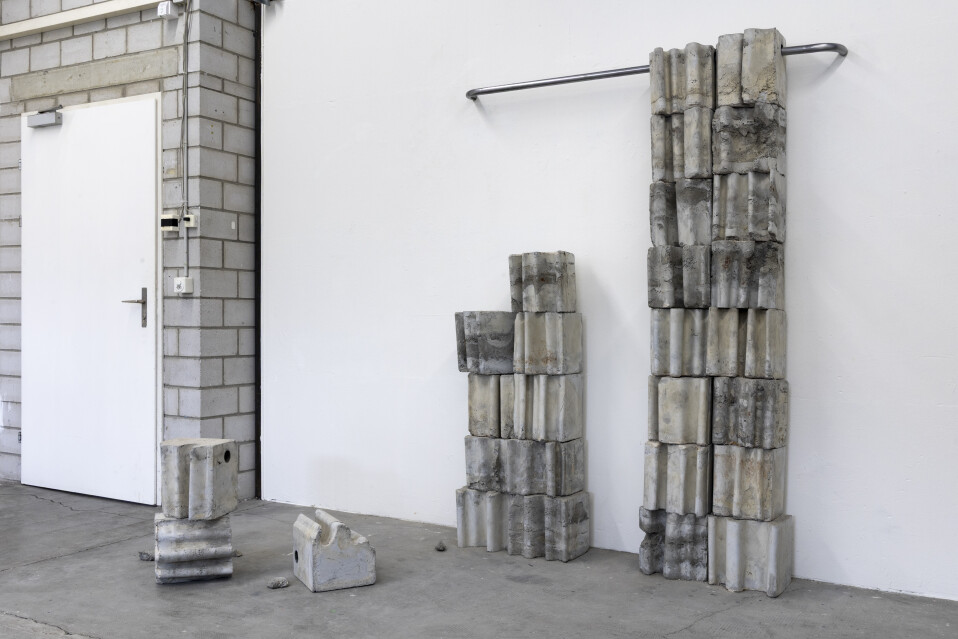
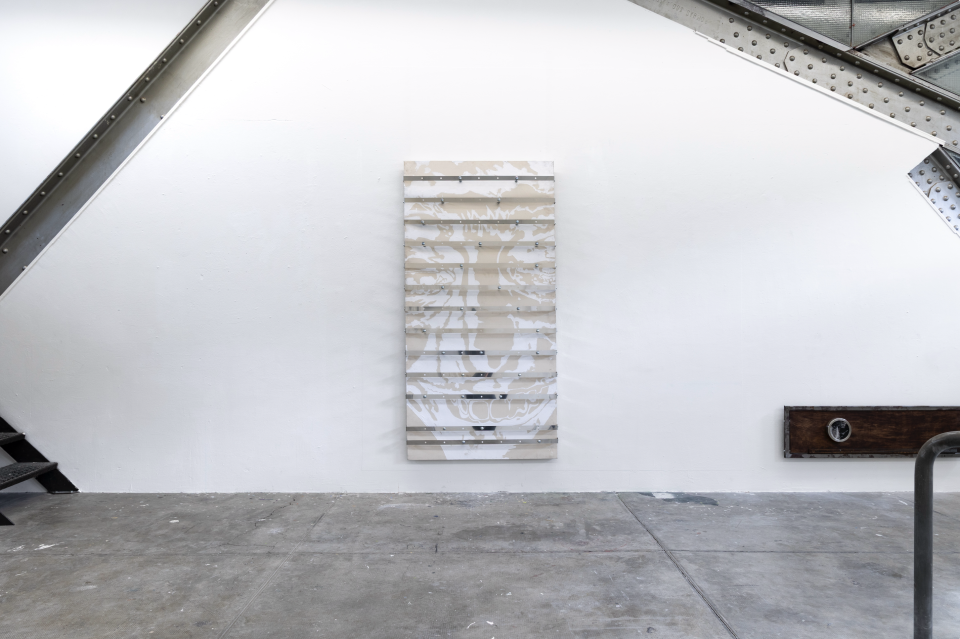
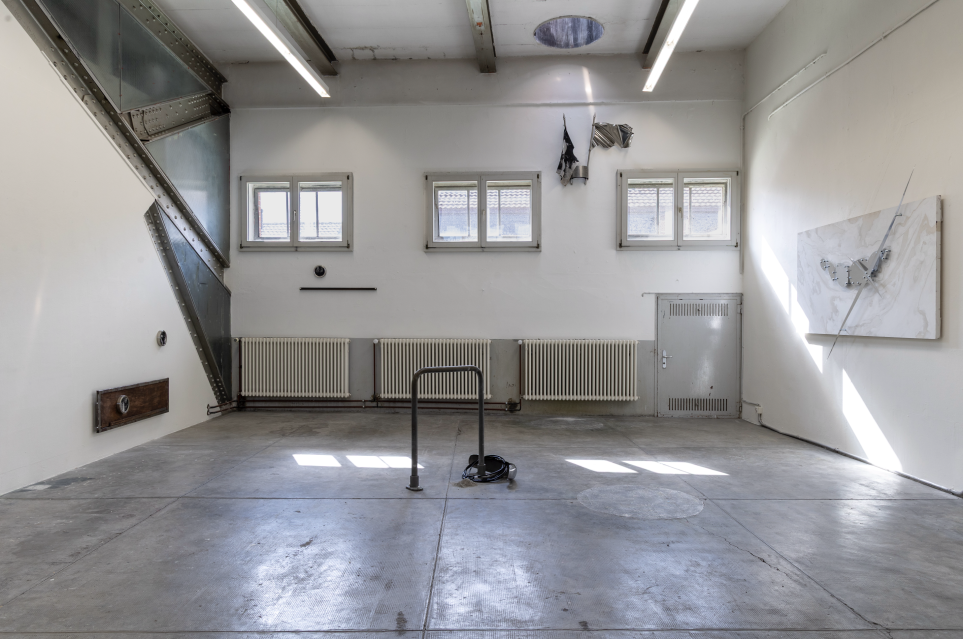
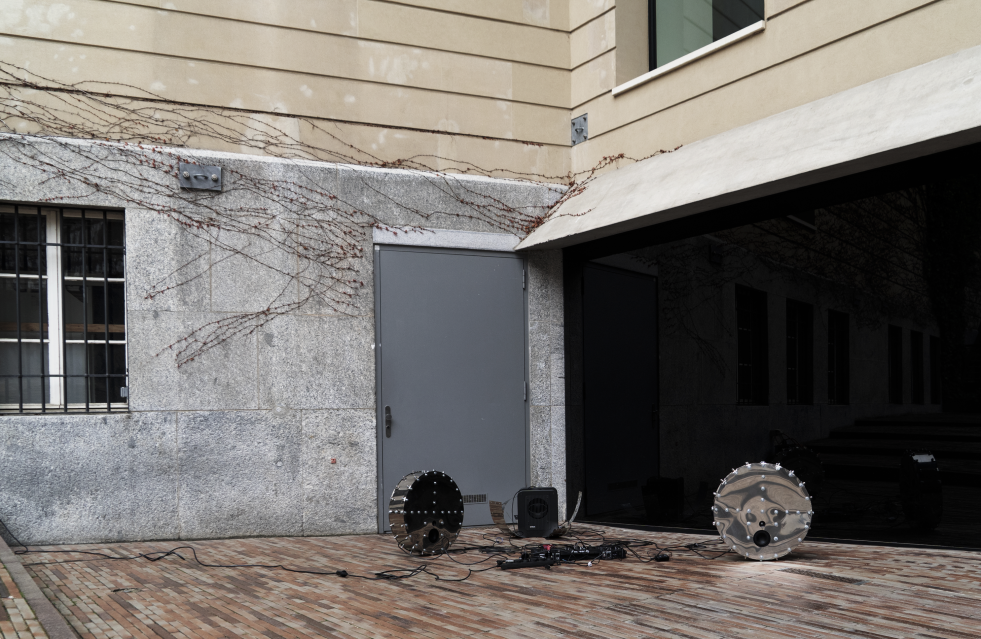
Kyryl Korin (he/him) explores how perception and social structures are constructed and embodied. In this context, space itself becomes an active participant. At Jungkunst, he is exhibiting two large-scale works that focus on different conceptions of space and time: the linear time of everyday life – measurable, cumulative, goal-oriented, shaped by deadlines and routines – and time as duration: a state without beginning or end, in which past and present overlap.
In the square work leaning against the wall, four human figures form a closed ring within a confined, brutalist space. Bodies and architecture are mutually dependent in an endless cycle. Fitted into a space of their own making, they are simultaneously constrained and fulfilled. The Ouroboros becomes emblematic of society. In the large-scale installation, emptiness takes centre stage. Four objects, each made up of two truncated pyramids, remain just a few centimetres apart. They are on the verge of touching – yet remain separate. The space between them becomes a place of anticipation. Fulfilment eludes them.