Artists

Justine Salamin

What remains of a heartbeat once the body falls silent? In 53 pacemakers, Justine Salamin (she/her) works with pacemakers removed from deceased people before their funerals. Once designed to maintain the rhythm of a heart, they become sound sources in her installation. Using an electromagnetic microphone, Justine makes the devices’ electromagnetic waves, normally imperceptible to the human ear, audible. In a video, she moves the microphone across the different pacemakers, translating their activity into low frequencies. Yet this rhythm is also finite: as their batteries run out, the devices will gradually fall silent. Disappearance thus becomes part of the work itself, bringing body and technology, presence and absence into close relation.

What first fascinated you about the pacemakers?
It was their sound and the fact that they had been removed from bodies. At a cardiologist’s, I discovered what they retained about these people: their identity and cardiac data, sometimes indicating the moment of cardiac arrest. Like a black box. From then on, I could no longer see them simply as prostheses.

Why was it important for you to make their electromagnetic waves audible?
For months, I kept them with me and listened to them. An alarm indicates that their batteries are running low. They also produce electromagnetic waves that we cannot hear. I wanted to give them a place, too.

What does it mean for the work that these sounds will disappear?
Disappearance is part of the work. The bodies fall silent, but the pacemakers continue to provide a rhythm - until they too become silent. The work therefore evolves independently of the duration of the exhibition.

53 pacemakers, 2024.

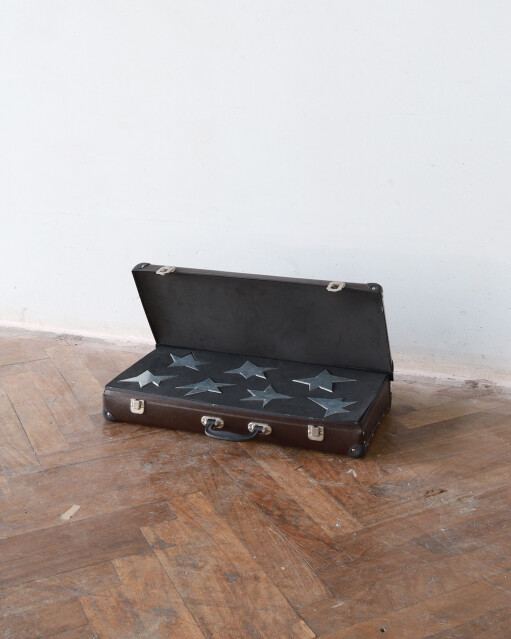
L’épreuve des étoiles, 2023.

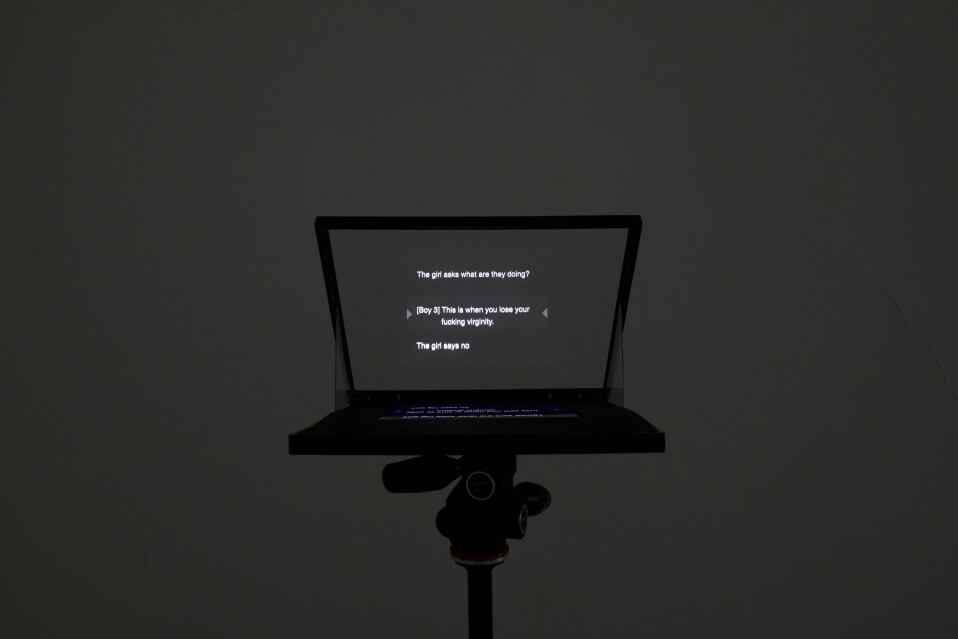
No is a complete sentence, 2023.